
Read the Bronx Current Owner Record Card
The NYC Property Information Portal labels the tax-account name "Property Owner." Copy it exactly. Jot down the BBL too. The property type, tax class, and access date confirm that the right parcel was opened, though the current owner conclusion still rests on the latest recorded deed in ACRIS.
Owner-of-record worksheet: Bronx BBL, situs address, PIP Property Owner, tax class, access date, latest ACRIS deed, grantee, CRFN, recording date, and discrepancy note. Keep one line for each fact.
Judge How Current the DOF Roll Is
DOF works through an annual Notice of Property Value. It also runs a tentative and final assessment-roll cycle. Updates follow no fixed schedule. A newly recorded deed can appear in ACRIS long before the tax card changes. Check both. The PIP interface offers address and parcel routes to open the owner card. So date-stamp whatever it displays.
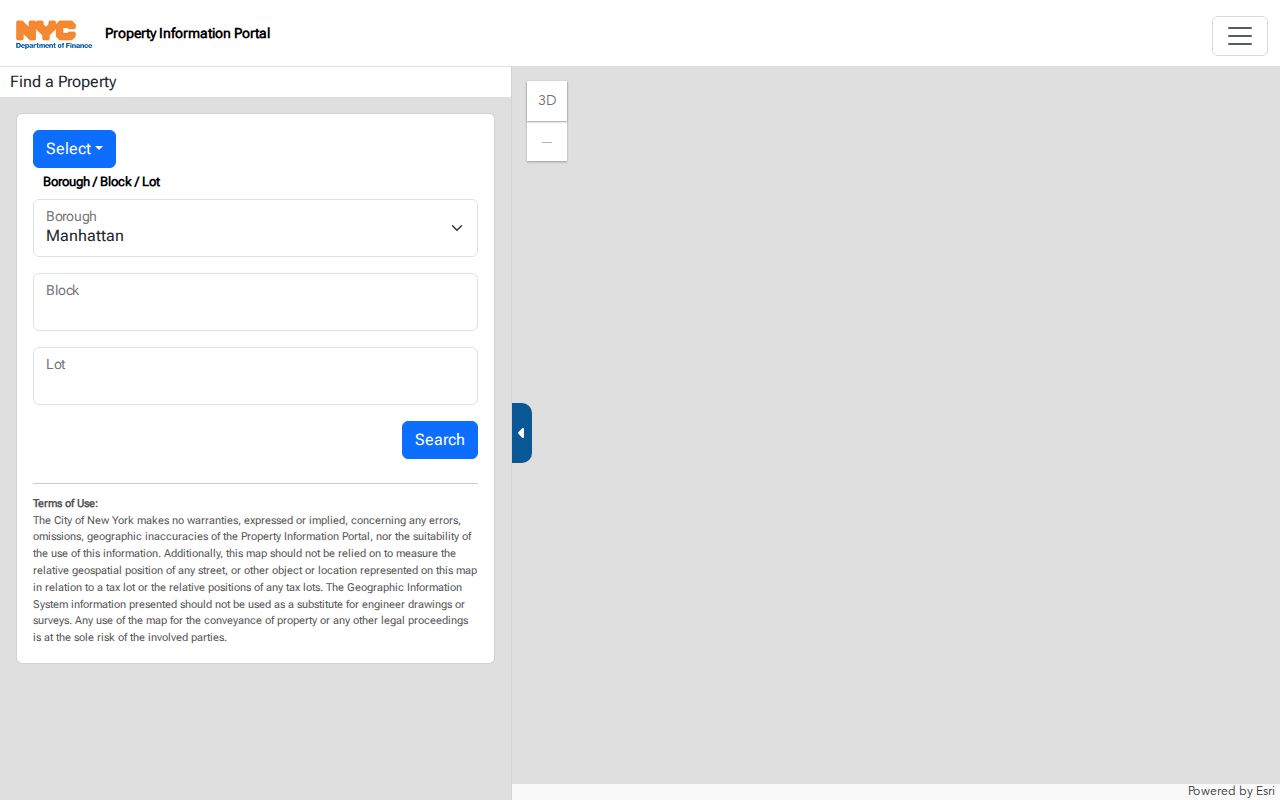
Save the chosen autocomplete address and resulting BBL to avoid comparing different lots.
Let a New Bronx Deed Correct an Older Tax Card
Search the exact BBL in ACRIS. Find the newest deed conveying the relevant interest. Then line up the grantee, document date, recording date and time, CRFN, parcel, and legal description. A newer deed beats an unchanged tax owner field. A full title conclusion may still need more than the web index.
Distinguish Bronx Address Types
A situs address names the physical property. A mailing address receives the tax bill, and the deed's legal description identifies the conveyed parcel. They need not match. Cooperatives, condos, air lots, and subterranean interests sharpen the difference, so lean on the BBL and parcel type as the stable bridge.
Use Recent Sales and Document Cards as Checks
PIP can list recent sales and up to 50 recorded-document rows. Treat them as quick cross-checks. The full chain lives in ACRIS. Open it for the CRFN, party roles, dates, parcel details, references, and the document image, and never mistake a mortgage lender or assignee for the current owner. The ACRIS field inventory lists what a record returns.
Corrections and referenced documents may explain a spelling, party, or parcel discrepancy.
Separate Assignments and Satisfactions From Ownership
Assignments and satisfactions are not deeds. An assignment can transfer a mortgage or another recorded interest, and a satisfaction can release a mortgage. Neither conveys fee title by itself. Check document class, party type, linked instrument, and legal parcel before adding any name to the current owner worksheet.
Resolve LLC, Trust, Estate, and Same-Name Owners
ACRIS gives business fields for an LLC and individual fields for a person. Match role, address, date, document type, and BBL. New York entity filings confirm formal names and filing history, while Surrogate or court records may explain fiduciary authority. The deed still rules.
Correct Bronx Owner and Billing Information
DOF offers owner-update and tax-bill correction routes. A deceased owner, a mailing change, and third-party billing each have their own process, and none of it is a quiet-title action. Use the matching form.
Protect Privacy in a Current Owner Search
New York runs an Address Confidentiality Program. It gives qualifying participants a substitute mailing address and mail forwarding. Never use Bronx County property records to defeat that protection or to locate where someone lives.
Owner limit. A date-stamped tax and deed comparison is research evidence, not permission to contact, track, or harass a person.
Resolve a Bronx Current Owner Discrepancy
Rule out a parcel mismatch first. Confirm the address PIP selected, the borough 2 BBL, parcel type, and any condo or cooperative identifier. Then compare tax owner and deed grantee. A gap from a recent recording is not the same as a gap from pulling a billing lot instead of a unit.
Read the document sequence next. A correction deed can repair a grantee name or a parcel description. A referee deed can follow foreclosure litigation. An executor or trustee can sign in a fiduciary capacity. A mortgage, assignment, or satisfaction can place a prominent name on the record without conveying title. Party roles and document class decide the meaning.
For an entity, run the ACRIS business search and the state corporation database to confirm formal and former names. For a person, compare middle initials, suffixes, party addresses, and dates. Guessing at residence settles nothing. The BBL and the linked instrument are stronger discriminators.
Close with a dated statement that names its limits. Say that PIP displayed one tax-account owner on the access date and that ACRIS displayed a later deed to a named grantee on its recording date. It shows the next researcher exactly what needs rechecking.
A discrepancy between Bronx records deserves a closer look. The PIP Sales and Documents cards only show a few rows. Treat them as a starting point rather than a full title chain. Open the matching ACRIS entry and read the instrument image itself. Follow any corrections or cross-references the document cites. Even when the tax card and the deed agree, keep the dates on file. A later filing can quietly change the answer.
Ownership research and occupancy are different questions. A mailing address on a property record may simply route notices to an agent. Or it may go to a business. A permit applicant could be a contractor acting for the owner of record. Voter, directory, and license entries each serve their own programs and prove nothing about title. Leaving those sources out of the conclusion cuts down same-name errors and protects privacy.
When the owner believes the tax record is wrong, the DOF update procedure can help. It handles qualifying owner, deceased-owner, mailing, and billing matters. It cannot settle a disputed deed or a judicial title question. Keep the submitted form and its confirmation. Then recheck the official account instead of assuming the change went through.