
Follow the Bronx Address-to-Owner Route
Start by resolving the address in the Department of Finance Property Information Portal. Save the BBL. The Property Owner field gives you the tax-record name. You confirm it against the most recent relevant ACRIS deed. The tax card is your fast lead. The recorded deed supplies the actual transaction evidence for the Bronx property.
| Step | Official source | Evidence saved |
|---|---|---|
| Identify the lot | PIP | Address and BBL |
| Read tax owner | PIP Property card | Property Owner, class, type |
| Confirm transfer | ACRIS | Latest deed, grantee, CRFN |
| Resolve conflict | Document image and references | Dates, roles, corrections |
Locate the Bronx Property Owner Field
PIP offers no standalone owner-name search. You can search by address, BBL, block, condo, co-op, REUC, air lot, or subterranean lot instead. That's the workaround. The result's Property card displays the tax-record Property Owner alongside the parcel facts. Treat it as an annual tax-account snapshot. Never treat it as a guaranteed title conclusion. The official PIP search choices show the available routes.
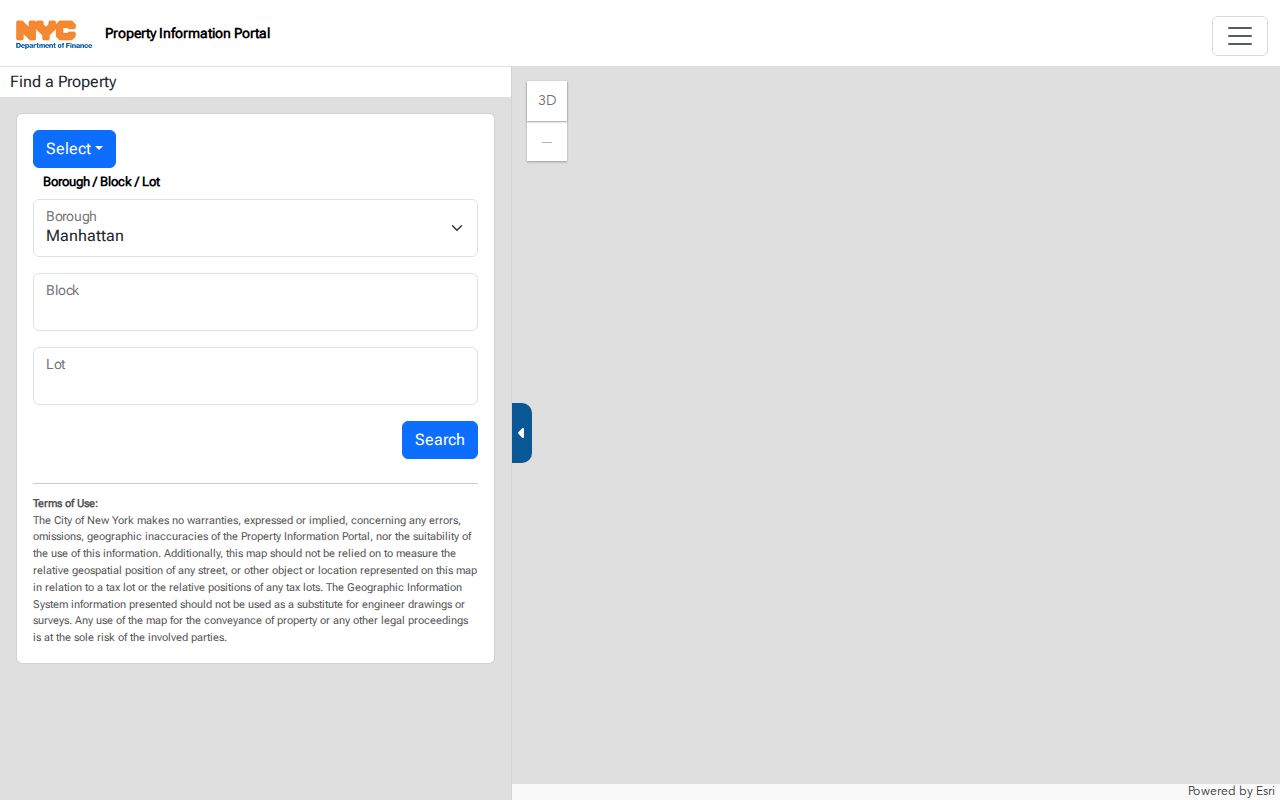
The BBL from that result is the key for the deed confirmation.
Confirm Who Owns the Bronx Property in ACRIS
Enter borough 2, the block, and the lot in ACRIS. Open the newest deed that actually conveys the subject interest. Compare its grantee, document and recording dates, CRFN, BBL, legal description, and references. A mortgage, assignment, satisfaction, or lien may list parties. It does not transfer any ownership. The ACRIS detail view explains the indexed fields.
Read the image itself when a correction, fiduciary deed, or unusual role changes the apparent answer.
Investigate a Bronx LLC Owner
Search the exact entity and its reasonable name variants in the ACRIS business field. Then use the New York Department of State public inquiry. It shows current and former entity names, status, jurisdiction, service address, and filing history. Corporate records help distinguish similarly named entities. But a service address or listed agent does not prove who owns the real estate.
Handle Trusts, Estates, and Fiduciary Deeds
A trustee, executor, administrator, referee, or estate can appear in the chain of title. Match the ACRIS party role to the deed type. Then consult Surrogate or Supreme Court records when authority or a court-ordered transfer matters. Never substitute a decedent's old tax name, a beneficiary, or a mailing contact for the grantee named in the operative instrument.
Separate Situs and Mailing Addresses
The situs address locates the property itself. The tax mailing address is where DOF sends notices. It may sit elsewhere entirely. A deed uses a legal parcel description and can state additional party addresses, so differences are often ordinary. Compare the BBL and the document role rather than assuming the mailing destination identifies occupancy.
Resolve an Empty or Stale Owner Card
A PIP result can come back blank or lag a recent recording. Search the BBL directly in ACRIS. Inspect former lots and the block-wide lot 0000. Review tax-map changes, and use the City Register counter or Land Records Research Library materials when necessary. The City Register publishes no fixed deed-to-roll lag, so date-stamp both searches.
Monitor a Bronx Address for New Documents
The free Notice of Recorded Document service registers an address or BBL. It then sends email or text alerts about later filings. The official notice registration form shows the required property and contact fields.
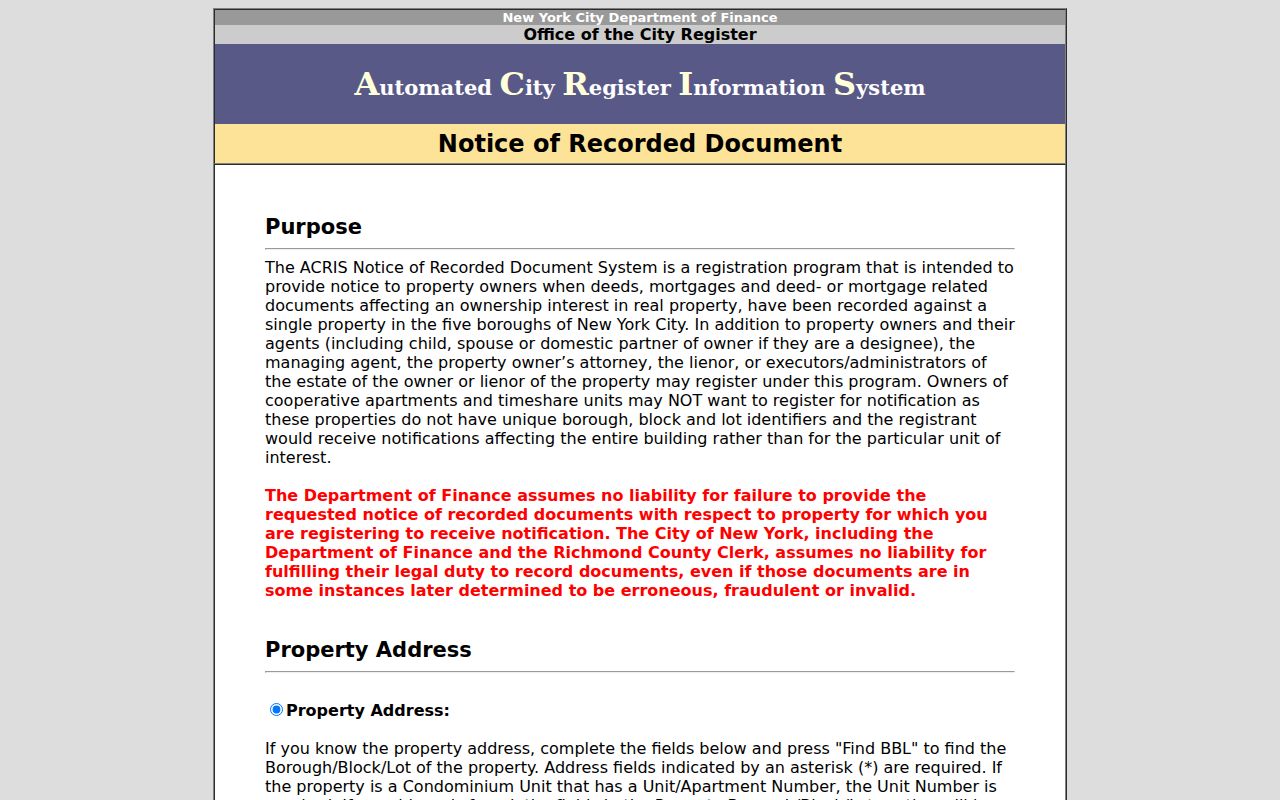
An alert only signals that a new document has hit the Bronx County property records, so inspect the filing itself before drawing conclusions.
State a Careful Bronx Owner Conclusion
Record the access date, address, BBL, PIP owner, latest deed type, grantee, CRFN, recording date, and any discrepancy. If the sources agree, call the result the apparent owner of record as of that date. If they conflict, report the conflict. Never pick the more convenient name.
Lawful use. Owner records support property research and due diligence; they do not justify harassment, tracking, or claims about who lives at an address.
Test Difficult Bronx Ownership Patterns
A recent transfer creates the simplest conflict. PIP may still show the seller while ACRIS already indexes a deed to the buyer. Preserve both access dates. Identify the newer grantee without claiming a known roll-update deadline. A correction deed or a deed recorded after closing can also change the apparent sequence. Follow references rather than sorting only by document date.
Special ownership forms need precise language. A cooperative resident usually holds shares and a proprietary lease. The cooperative entity owns the real estate. A condominium unit may have its own lot within a larger building. A life estate can divide present possession from the future interest. A trustee, executor, or referee may convey in a representative capacity. The owner answer must describe the actual interest you searched.
Historical searches add another layer. A modern BBL may have replaced older lots. An address may have changed too. Use tax-map history and block-wide ACRIS results before following a party name. When the chain predates 1966, move to the Land Records Research Library. Annexation dates can then redirect nineteenth-century work into Westchester or New York County sources.
Other public records can corroborate identity, but each should stay in its lane. A business filing supports an entity-name check. A permit identifies an applicant or owner field used for that filing. A court case can explain a referee or estate transfer. None should silently replace the operative deed and the exact parcel match.
A careful answer also draws its own limits. A tax owner shown in PIP is exactly that. It is the name the tax roll displays, nothing more. When the answer leans on ACRIS, cite the latest deed and its recording date. Do not imply that every encumbrance or off-record interest was examined. An old lot number, a trust, an estate, or a cooperative structure narrows the conclusion further. The answer should say so plainly. A narrow statement tied to its evidence beats a confident one that hides the scope.
Handle the finished worksheet with care too. Owner names are public in the Bronx County record. Copying unrelated contact details or protected address information adds risk without improving parcel research. New York runs an Address Confidentiality Program. It shields qualifying participants behind substitute addresses and mail forwarding. Rely on the least personal information needed. That is enough to tell the recorded parties apart and explain the property interest.
Note: Recheck the official Bronx County sources before relying on an older worksheet. A new deed or administrative update can change the recorded owner.